
Sensor and instrumentation product information, application guides, technical support articles, online converters and calculators to help with your measurement requirements.
Measurement Instrument Specifier
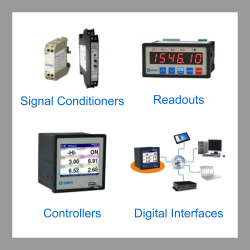
Request product information & pricing for a measurement instrument that meets your application requirements.
>> Select requirements
Pressure Sensor Specifier

Request product information & pricing for a pressure sensor that meets your application requirements.
>> Select requirements
Liquid Level Sensor Specifier
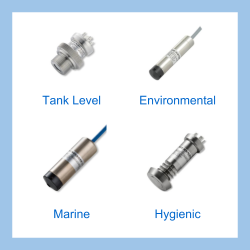
Request product information & price for a liquid level sensor that meets your application requirements.
>> Select requirements
Need help choosing a measurement product?
Finding a suitable product for your measurement application can be a time consuming exercise, especially if you are not familiar with the different product types and technical jargon used to define measurement instrumentation.
If you would like help in finding a suitable product, please use this enquiry form to describe your product requirements, or the measurement solution you are aiming for, and you will be sent details on a product to consider, plus a quotation if sufficient parameters can be specified.
Product Selection Guides
Use these product selection guides for guidance on selecting and using a particular measurement product type.
 Data Loggers - A guide to data loggers including explanations, applications and product selection guide for recording measurement data.
 Differential Pressure Sensors - Differential pressure sensor product selection guide for sensors used to measure the difference in pressure between two points.
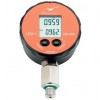 Digital Pressure Gauges - This guide will help you choose digital pressure gauges by pointing you to the most appropriate product for a particular feature or function
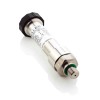 Digital Pressure Sensors - This guide will help you choose a digital output pressure sensor for your application and explain the benefits of using a digital interface to transmit pressure readings.
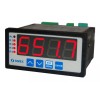 Digital Readouts - Digital readout instruments for displaying measurement readings of sensor inputs and providing controller output signals.
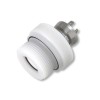 Hydrostatic Liquid Level Sensors - Collection of resources for selecting and using a hydrostatic liquid level sensor.
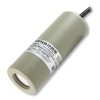 Liquid Level Sensors - Device for measuring liquid level and converting it to an electrical signal to send to other instrumentation.
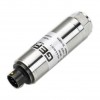 Millivolt Output Pressure Transducers - This guide will help you select a millivolt output pressure transducer and explain the advantages of using this type of pressure sensor.
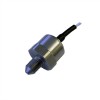 Pressure Transducers - A pressure transducer is a device which converts an applied pressure into a measurable electrical signal.
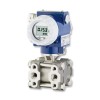 Pressure Transmitters - Find pressure transmitters for your application. Select an article to help with selecting or using pressure transmitters
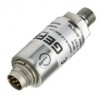 Voltage Output Pressure Transducers - This guide provides information on the types of voltage output pressure transducers you can use, and how to choose the right output signal for your application.
Application Selection Guides
Use these application selection guides for guidance on selecting and using measurement products for a particular application requirement.
- Absolute Pressure
- Barometric Pressure
- Compound Pressure Ranges
- Differential Pressure
- Dual Temperature and Pressure
- Flush Diaphragm
- Hydrostatic Pressure
- Low Pressure Range
- Marine Approval
- Overpressure Protection
- Pressure Calibration
- Submersible
- Suction Pressure
Help Guides
Use these help guides for tips and explanations on specifying, installing and using measurement instrumentation.
- Why use 4-20mA and 3-15 psi rather than 0-20mA & 0-15psi
- What is the difference between zero offset and zero drift?
- What is the difference between vacuum and absolute pressure
- What is the difference between gauge and absolute pressure measurement
- What is difference between working, burst and over pressure
- What does negative and positive gauge pressure mean
- What can cause random variation in pressure transducer output
- What can a DP sensor be used to measure beyond differential pressure?
- Supply voltage and load resistance considerations for pressure transmitters
- Process Connections
- Pressure Sensor Accuracy Specifications
- Measuring vacuum with negative gauge or absolute ranges
- Measuring the volume of liquid in a horizontal cylinder tank
- Measuring the difference in air pressure between rooms
- Measuring negative pressure using a positive differential pressure range
- Measurement Accuracy
- How to Connect a 4-20mA Current Loop Pressure Transmitter
- How do you measure the volume of a liquid using pressure
- Determining water tank volume using hydrostatic pressure
- Choosing PVC, PUR, FEP and TPE cable types
- Can you measure vacuum using a gauge pressure range
- Calculating required pressure range for fuel tank level measurement
- Advantages and Disadvantages of using a 4 to 20 mA Signal
Online Measurement Tools
Choose a tool to simplify calculations to convert measurement signals, engineering units and other specification parameters.
- 4 to 20 mA Supply, Load, Shunt and Signal Calculator
- Absolute – Barometric to Gauge Pressure Calculator
- Combined Gas Law Calculator
- Density to Specific Gravity Calculator
- DP Flow Transmitter Output Calculator
- Fluid Depth, Density, Gravity, and Pressure Calculator
- Force & Area to Pressure Calculator
- Gross – Tare to Net Weight Calculator
- Leak Rate Calculator
- Measurement Reading to 4-20mA Signal Converter
- Piston Cylinder Pressure and Diameter to Force Calculator
- Pressure Converter
- Pressure Sensor Calculator
- Temperature Coefficient Converter
- Temperature Converter
- Temperature Difference Calculator
- Temperature Difference Converter
- Temperature Sensor Calculator
- Temperature, TCR Coefficient and Electrical Resistance Change Calculator
- Vacuum to Suction Pressure Calculator
- Voltage & Current to DC Electrical Resistance Calculator
- Voltage & Current to DC Power Calculator